
Since its debut some 13 years ago, the Moto G line has always been Motorola’s way of setting expectations for what a budget phone should feel like. Not flashy, not aspirational, but dependable and thoughtfully tuned for everyday use. The Moto G (2026) sticks closely to that playbook, even as competition in the sub two hundred dollar space grows sharper and less forgiving.
Let’s get it out of the way. This is not a phone that tries to outgun rivals on specs. You surely didn’t expect that out of the $200 device, did you? Instead, Motorola leans into comfort, endurance, and a sense of polish that feels intentional rather than accidental. That strategy mostly works, though a few compromises stand out more clearly than they did in previous generations.
Design and build: unexpectedly premium where it counts
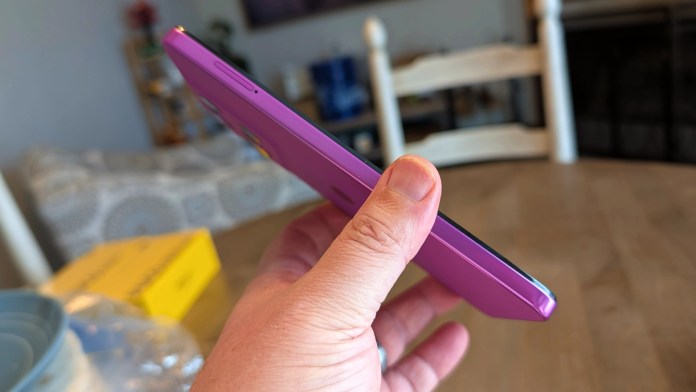
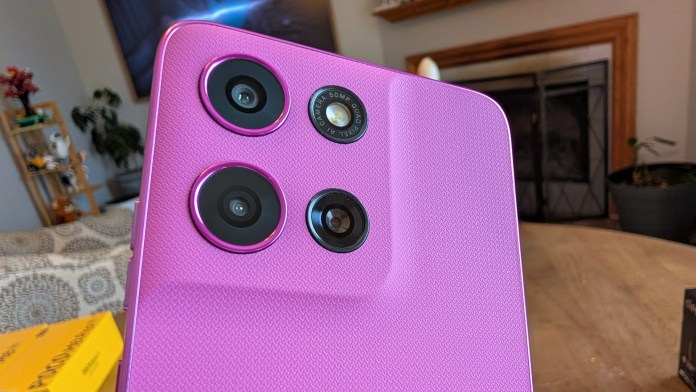
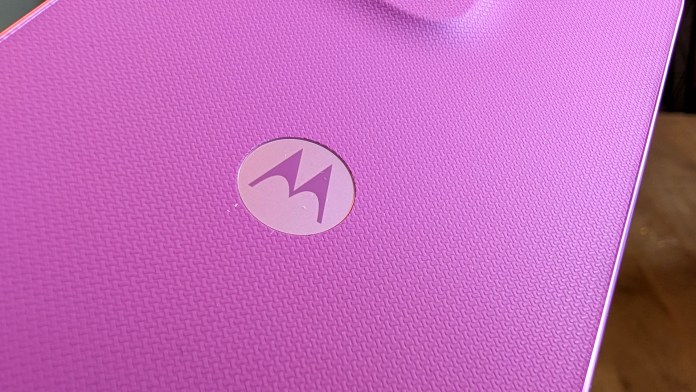
The most immediate surprise with the Moto G (2026) is how it feels in hand. Motorola’s continued use of a vegan leather back is more than a cosmetic flourish. The soft, textured finish adds grip, resists fingerprints, and makes the phone feel secure without a case. It also avoids the cold, slippery sensation that plagues glossy plastic and glass-backed phones in this price range.
The Moto G (2026) succeeds by being honest about its priorities, even when those choices come with trade-offs.
The curved edges and gently integrated camera housing help the phone feel slimmer than its size suggests. While the frame itself is plastic, it is well finished and sturdy enough for daily use. This is one of those phones that feels designed to survive real life rather than live in a case from day one.
The front tells a more familiar budget story. Bezels are thick, especially along the bottom edge, and the LCD panel gives the phone a slightly dated look next to newer midrange devices. It is not offensive, but it does underline where Motorola chose to save money.
An IP52 rating provides light splash and dust resistance, which is better than nothing but well short of true peace of mind. This is a phone that can handle rain or a spill, not a drop into the sink or a plunge in the pool.
Display: Smooth Motion, Soft Details
Motorola made a clear choice with the display, and it will either resonate or frustrate depending on priorities. The 6.7-inch LCD panel runs at a 120hz refresh rate, which gives the interface a smooth, fluid feel. Scrolling, animations, and general navigation feel quick and responsive, even when the hardware underneath is modest.
The trade-off is resolution. At 720p, text and fine details lack the crispness expected in 2026, especially on a screen this large. Side by side with a full HD OLED panel, the difference is obvious. Colors are decent, brightness is adequate indoors, and outdoor visibility is serviceable, but this is not a display built for media enthusiasts.
Motorola is betting that fluidity matters more than sharpness for most buyers in this segment. That bet mostly holds for casual use, though it becomes harder to defend when competitors offer sharper panels at the same price.

And it’s here where I remember that reviewing a phone is hard to do in a vacuum. One cannot help but compare and contrast other devices, especially when you’re able to see and spend time with so many products. But, having said that, and donning my most subjective hat possible, I posit that 720 pixel resolution is more than acceptable for most people.
Performance: steady, predictable, and limited
The Moto G (2026) runs on familiar silicon, and it behaves exactly as expected. Everyday tasks like messaging, browsing, navigation, and streaming are handled without drama. The clean software experience helps mask hardware limits, and the high refresh rate adds a sense of responsiveness that benchmarks would not suggest.
Multitasking is where the constraints show. With 4GB of RAM, background apps are cleared aggressively. Jumping between multiple apps often triggers reloads, and heavier workflows quickly expose the phone’s ceiling. This is not a device for power users, and it does not pretend to be one.
Gaming is possible, but expectations need to be managed. Casual titles run well. Demanding games require low settings and still struggle to maintain consistent performance. The hardware is capable, but only within clearly defined boundaries. Heavier gamers are already looking elsewhere for their needs.
Storage, at 128GB with microSD expansion, is a bright spot. For users who store photos, music, or offline media locally, that flexibility still matters.
Software: Familiar Strengths, Familiar Frustrations
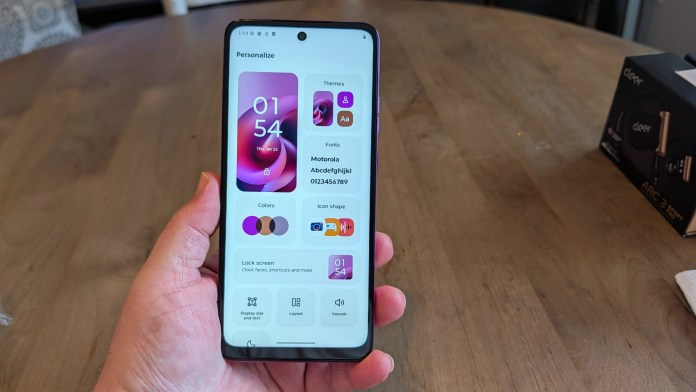
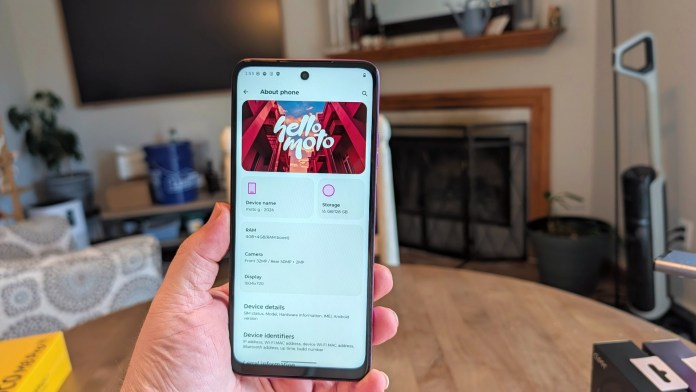
Motorola’s software approach remains one of its biggest assets. The interface stays close to stock Android, with just enough personality to feel considered rather than generic. Gesture shortcuts like the double chop flashlight and twist-to-open camera remain genuinely useful and are hard to give up once learned.
The out-of-box experience does require attention. Setup screens encourage optional app installs, and skipping carefully is the difference between a clean phone and one cluttered with third-party software. This is standard practice in the budget space, but it still detracts from an otherwise polished first impression.
Update support remains the biggest concern. Two platform updates and three years of security patches feel increasingly out of step with the market. Buyers who plan to keep a phone for several years should factor this in, especially when alternatives offer significantly longer support windows.
Then again, if you’re only spending $200 on a phone every two or three years, you probably don’t care that much about software. And it’s worth noting that the last few generations of Android have not been that revolutionary or packed with hot new features.
Cameras: Adequate Results, Limited Versatility
The main camera delivers predictable results. In good lighting, photos look pleasant and social-ready, with punchy colors and decent detail. Dynamic range can struggle in high-contrast scenes, and low-light performance is acceptable rather than impressive.
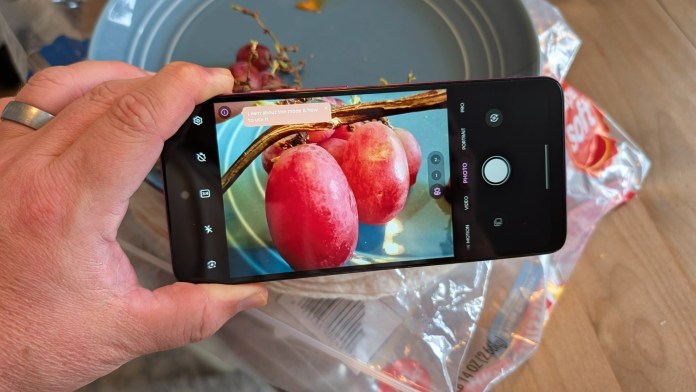
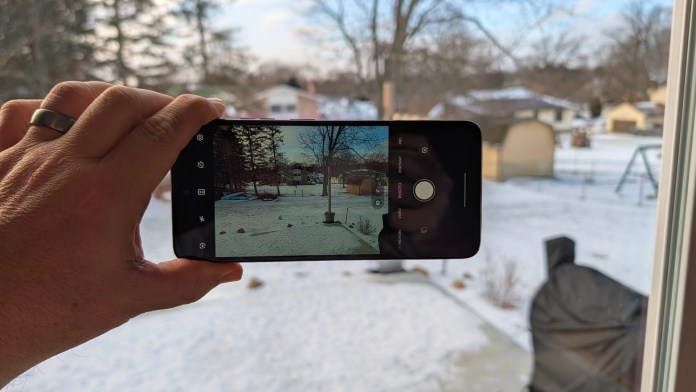
The secondary macro camera adds little real value. It exists more for spec sheet completeness than practical photography. The selfie camera is a noticeable improvement over previous generations, though image processing can be heavy-handed at times.
Video recording tops out at 1080p, which is fine for casual clips but unremarkable in a crowded field.
Battery Life: A Headline Feature
Battery life is where the Moto G (2026) earns its reputation. The large battery, paired with an efficient display and modest chipset, delivers consistently excellent endurance. Two full days of mixed use is realistic, and lighter users can push beyond that without stress. Not bad at all for a $200 phone.
Charging is reasonably quick with the right adapter, though the absence of a charger in the box complicates the value equation. Users without a compatible charger will need to factor in an additional purchase.
Wireless charging is absent, which aligns with the rest of the segment but still feels like a step backward compared to older Moto G models.
Connectivity and Extras: Practical, Not Flashy
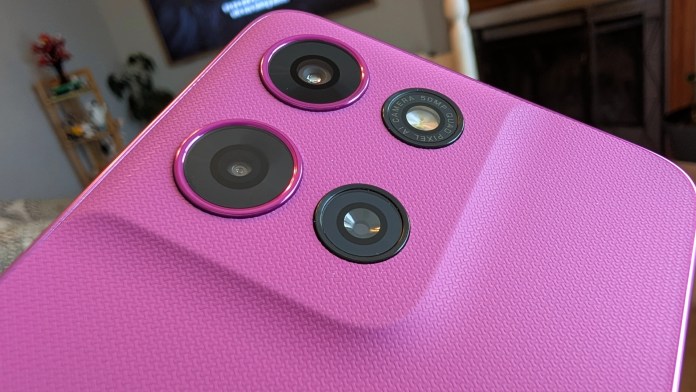
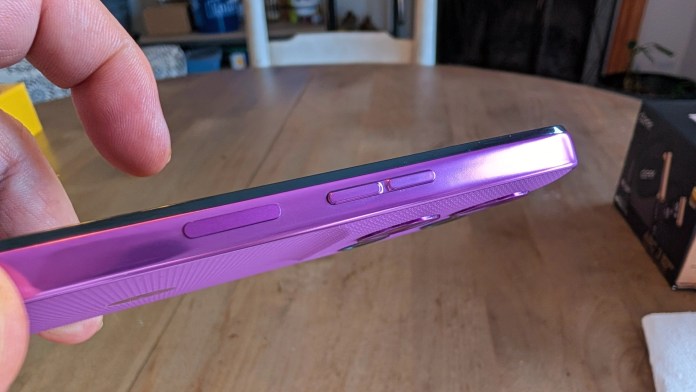
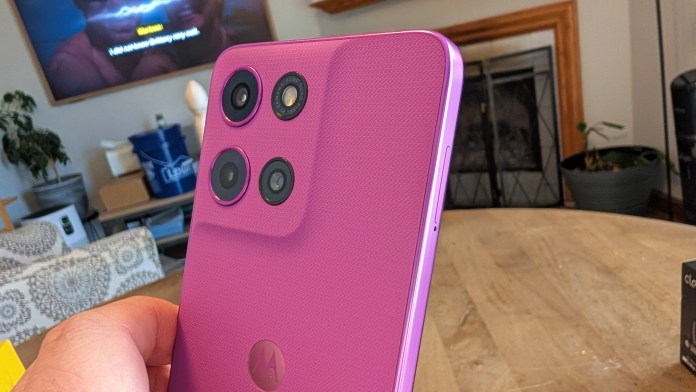
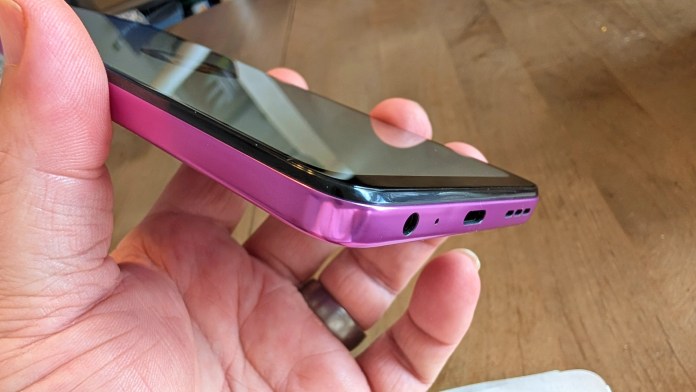
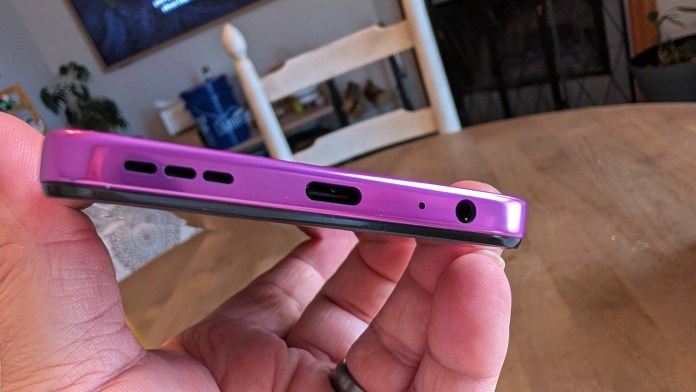
The essentials are all here. Reliable sub-6GHz 5G, NFC for payments, stereo speakers that get loud enough for casual use, and a headphone jack that remains genuinely useful. Audio quality is fine rather than rich, but the flexibility matters.
Wi-Fi performance is solid for most households, even if newer standards are not supported.
The Final Take
The Moto G (2026) succeeds by being very clear about what it is and what it is not. It is not chasing spec-sheet bragging rights, and it is not trying to future-proof itself for half a decade. Instead, it focuses on the parts of the experience people actually touch every day: how the phone feels in hand, how long it lasts on a charge, and how smoothly it moves through the basics.
That focus gives the Moto G (2026) a distinct personality in a crowded budget field. The vegan leather back is not just a visual upgrade, it changes how the phone is used. The battery life is not merely good, it is genuinely freeing. The clean software and high refresh rate make the phone feel responsive even when the hardware underneath is modest.

Awarded to products with an average rating of 3.75 stars or higher, the AndroidGuys Smart Pick recognizes a balance of quality, performance, and value.
Products with this distinction deserve to be on your short list of purchase candidates.
At the same time, Motorola’s compromises are impossible to ignore. A 720p display on a large screen feels dated in 2026, and the limited software update promise puts a clear expiration date on the experience. This is a phone meant to be used confidently today, not stretched as far into the future as possible.
For buyers who want a comfortable, dependable Android phone that prioritizes battery life, grip, and day-to-day smoothness, the Moto G (2026) remains easy to recommend. For those who value display sharpness, camera versatility, or long-term software support, competing options offer a better return over time.
The Moto G (2026) does not redefine the budget category, but it reinforces why the Moto G name still matters. It delivers a thoughtful, livable experience built around real habits rather than aspirational specs, and for the right audience, that balance still works.