
When I looked back on 2025 to assemble my advent calendar votes, I was surprised how many of them were smaller titles, especially in a year that saw both a new Silent Hill and Doom hitting the shelves. But then I remembered this year the Steam algorithm’s whispered in my ear like the Green Goblin Mask to Norman Osborn, guiding me to lovely indie gems (and telling me to squash that Spider-Man).
Neither Doom: The Dark Ages nor Silent Hill f could trump the fun I had playing the smaller delights. When the final Advent Calendar votes were tallied, a few of my favourites were left on the cutting room floor. Clover Pit, No, I’m Not A Human, and The Roottrees Are Dead. Routine would’ve been in the mix too if it dropped prior to our submissions. But the following five games deserve their moment in the wintry sun.
Easy Delivery Co.
I love Euro Truck Driving Simulator. I love Death Stranding. In short, I love delivering big ol’ packages while listening to a podcast and gesturing my hands aggressively when things go wrong. Easy Delivery Co. was catnip to me. Appropriate, as you play a cat in a snowy town, bombing around in a pick-up truck delivering packages.
Its driving physics are chaotically arcadey, and I spent hours zooming over big heaps of snow with a towering pile of cardboard boxes haphazardly duct-taped to the cargo bed. But that loop quickly expanded into something far more involving.
The quiet streets of its three quaint locales hid an eerie mystery unravels as you adventure. On top of that are the eccentric locals who loop you into their side plots. I especially loved the cat in the general store, who had a crush on the girl working at the bakery. The same Bakery girl that would exclusively talk about how much she loved dirt. The surreal silliness almost felt like Eurotruck Simulator meets Animal Crossing meets Twin Peaks, a delectable trifecta.
The only reason it didn’t appear higher in my voting was because it was a victim of its own perfection. I rinsed it dry of new parcels to deliver in just three days.
Oblivion: Remastered

Yes, a remaster made my list. I’m criminal scum, and I will pay the court a fine or serve my sentence. But I won’t pretend Oblivion: Remastered isn’t among my favourite games this year. I grew up with Oblivion and played it endlessly, so returning to Cyrodiil, customising my revolting Argonian and closing shut the jaws of Oblivion for the hundredth time felt like coming home.
The remaster did make things prettier, an appreciated uplift considering the original looked like over-saturated sludge. But Bethesda kept Oblicion’s charming blemishes while giving them a few modern touch-ups. They improved the AI, but townsfolk still engage in “groundbreaking” idle dialogue, where they stand around having asinine, completely nonsensical jump between mud crab sightings and slagging off their neighbours with zero segue. Combat feels better, but every time you level up, the world still levels up too, leading to a scrounging beggar pulling a mythical greatsword from his rags to smite you if you pickpocket him.
Oh, and of course, they didn’t get rid of NPCs lunging out of nowhere to initiate conversations. It wouldn’t be Oblivion if you weren’t jumpscared by a magnified close-up of a potatoey face accosting you for violating the law. Oblivion has always been a hot mess, but it’s my hot mess.
Peak

If we’re really coining “friend slop” as a genre, Peak has already sat its butt right beside Lethal Company, Phasmophobia and Among Us on my friend slop Mount Rushmore. Screw Arc Raiders. This was my multiplayer juggernaut of the year. Over countless runs landing on its randomised desert island shores, scavenging for survival resources and then beginning my string of long, physics-based mountain scrambles with friends, I’ve become obsessed with it.
Dragging my little customisable goober up the mountain, watching my dwindling stamina bar drain and hearing my friends’ screams as they plummet down to their doom from below, I came away with so many organic stories. Almost all of them revolved around me being a menace. I’ll never forget testing whether a mushroom was edible by force-feeding it to my far too trusting buddy, who seemed fine until he started shouting expletives, entered a comatose state and comically slid off a rock into the bubbling lava pits below us.
And it’s made all the funnier by how expressive and adorably mischievous its Saturday morning cartoon art style is. I play co-op games every week with my long-distance pals, and if my passionate recounting of Samwise Gamgee’s Mount Doom monologue as I lugged my passed-out friend onto my back and hauled us up the mountain is anything to go by, Peak was the most fun I had in those weekly sessions.
Repo
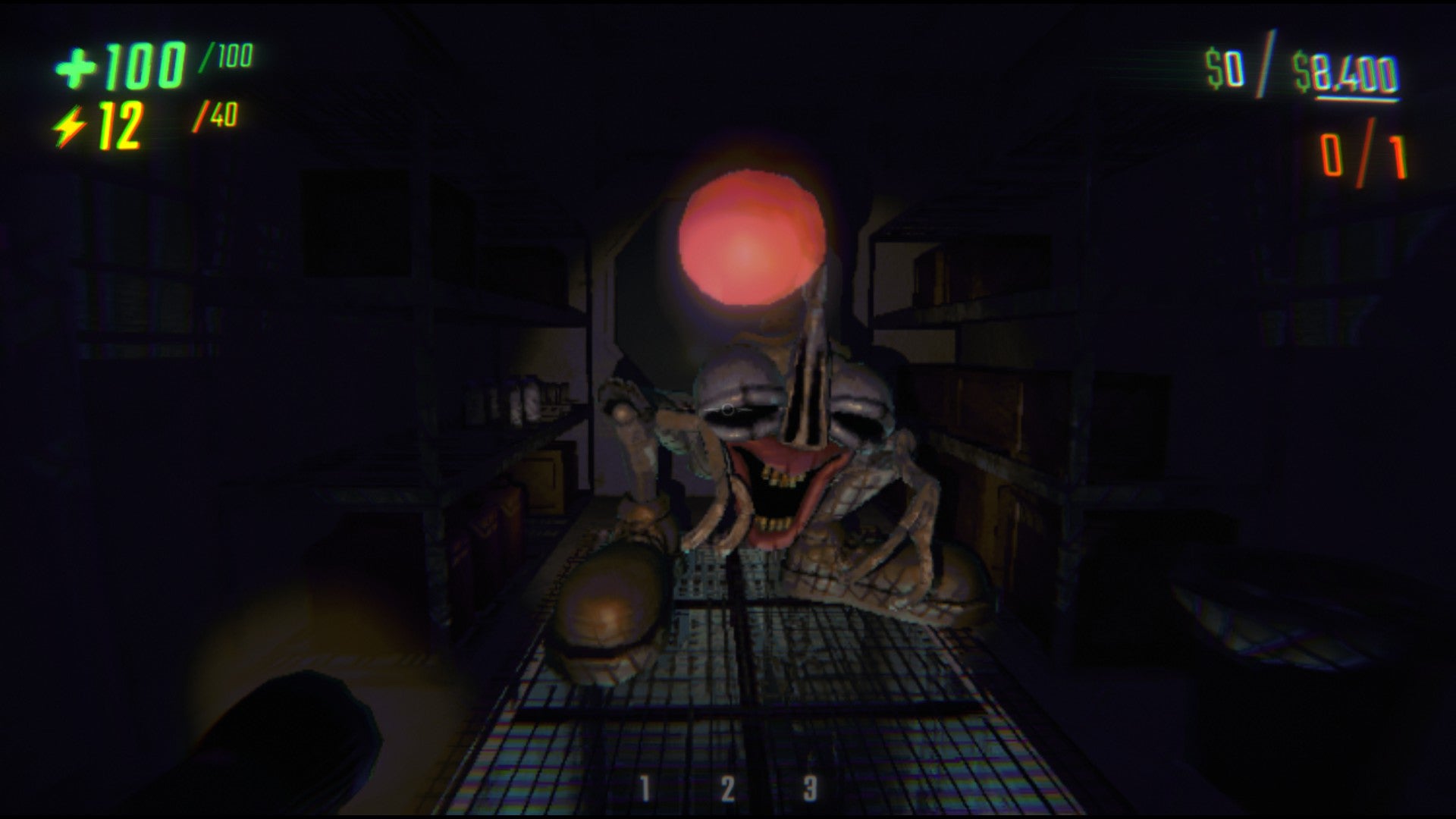
Assembling this list, I knew Peak and Repo were going to be neck and neck, and for good reason. I duel-wielded these games every time I’d hop online with friends. Repo’s deal is simple. You play a colourful crew of bug-eyed bailiff robots that explore haunted buildings and ransack them for cursed items. Problem is the previous residents are home, and most of them are floating skeleton heads with chomping teeth or laser-firing clown monsters.
Going in, I expected another textbook Lethal Company clone, and man, it blew me away. It’s got so much charm, from the unsettling monster designs to the physics-based systems that power its gameplay. Every time you lift an item, you have to carefully manoeuvre it so it doesn’t slam into walls and shatter, which led to a million arguments. But you can never argue for too long, because Repo’s spooky ghouls are always lurking nearby.
My first few runs were all fun and dysfunctional bickering until my team encountered a blind enemy with a double-barrelled shotgun, and his heightened hearing exposed my kryptonite: Keeping my trap shut. Every time I play, I’m shaking in my little booties, and it’s even funnier knowing that’s because its enemies just follow the sound of me yapping through proximity chat.
Wanderstop

Wanderstop’s a game I wish made the Advent Calendar, purely because I have far too much to say. The tale of Alta, a prizefighter trapped making tea in an inescapable forest, was a virtual therapy session that really spoke to me. On the surface, it’s a farming game. You grow crops, turn them into tea, and then give said tea to the array of magical patrons that arrive and burden you with their problems.
But the mundanity of that gameplay loop serves a purpose. Alta enters the forest as a formerly unbeatable warrior coming off her first loss, and now she’s aggressively brute-forcing a “fix” to the part of her that’s been beaten down and can’t seem to get back up. My mindset can be frustratingly similar. I’m the king of setting ambitious goals and bullying my burnt-out brain when I hit a wall, take my foot off the pedal and question whether I even want them anymore.
Alta’s quest to make the perfect cuppa felt like a dev reminding me to look after myself. Its farming mechanics are monotonous, but that monotony offered a break from life to focus on something insignificant. And through that break, Wanderstop impressed the importance of taking stock, respecting myself and befriending my brain. It was therapeutic, and if anything I’ve said sounds relatable, it’s a break I’d implore you to take, too.