
For two weeks, it was the gaming world’s biggest mystery: What’s the deal with that demonic monolith sitting in the Mojave Desert? Speculation kicked into high gear when Game Awards producer Geoff Keighley posted a picture on X of the mysterious statue, making it clear that it was a teaser for some big game announcement. The internet kicked into overdrive to crack the mystery. Diablo 4 DLC? The Elder Scrolls 6? Half-Life 3?
While players threw out wild theories, the developers at Larian Studios were gleefully sharing every theory in a Slack channel. They knew the answer: It was a teaser for their next game, Divinity. It was the only place where they could talk about it, because they had all sworn an oath of secrecy. They were so committed to keeping it quiet that even they got swept up in the hype.
“I had a moment where I saw people speculate that it was Bloodborne 2,” Divinity writing director Adam Smith told Polygon in an interview following the Game Awards. “And I was like ‘Oh I hope it is!’ And then I was like ‘No, it’s definitely not!’”
The statue made for a great water cooler moment, but that reaction did spark a question in Smith’s mind: “Do you end up disappointing people if you create hype?” That question is one that Larian Studios is about to grapple with as Divinity approaches. Billed as the studio’s “most ambitious” game yet, the RPG is going to have a lot more eyes watching its development following the success of Larian’s previous project, the Game of the Year-winning Baldur’s Gate 3. Just a few hours after the game’s gruesome reveal, I spoke to a very confident team at Larian who seem to believe that they can meet the impending hype.
“I think the biggest thing is that we don’t want to disappoint fans,” Larian founder Swen Vincke said when I asked if Larian was worried about immediately losing new fans who were expecting Baldur’s Gate 4 next. “We think the reason that they played Baldur’s Gate 3 is the gameplay. That’s our formula, and it was originated in Divinity so it’s essentially going back to the roots of it.”
One of the first things we did was start to build a universe, because Divinity was all over the place.
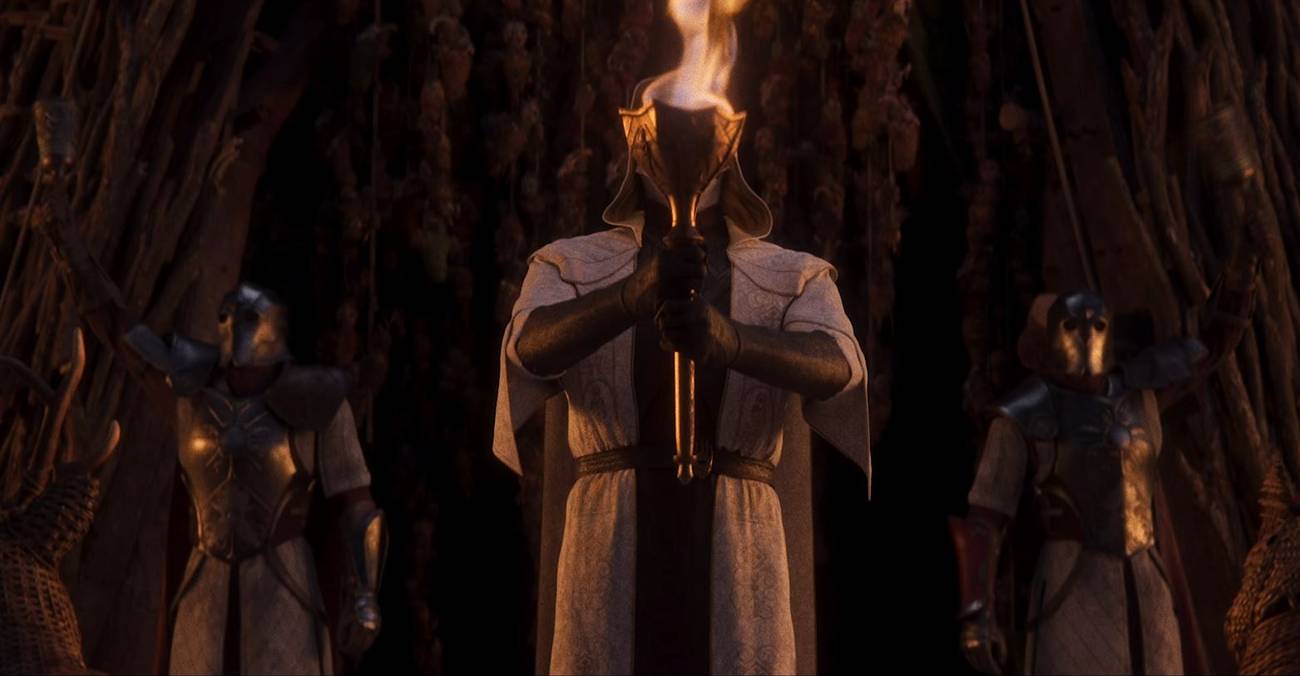
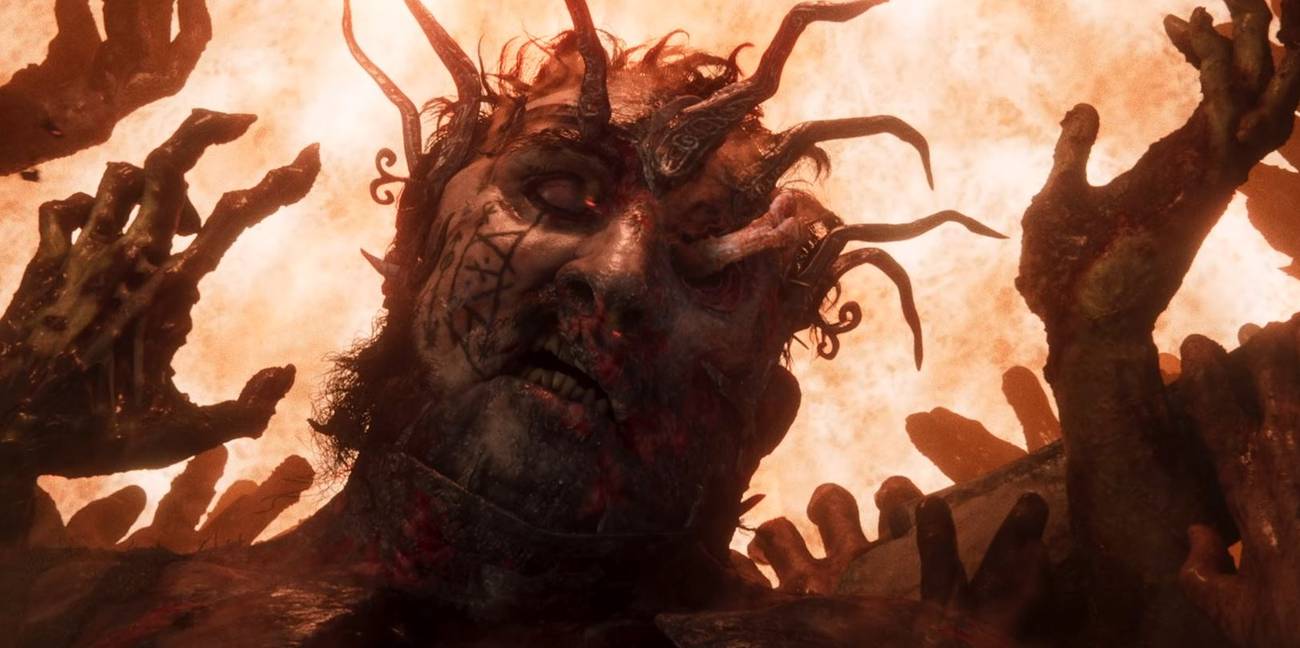
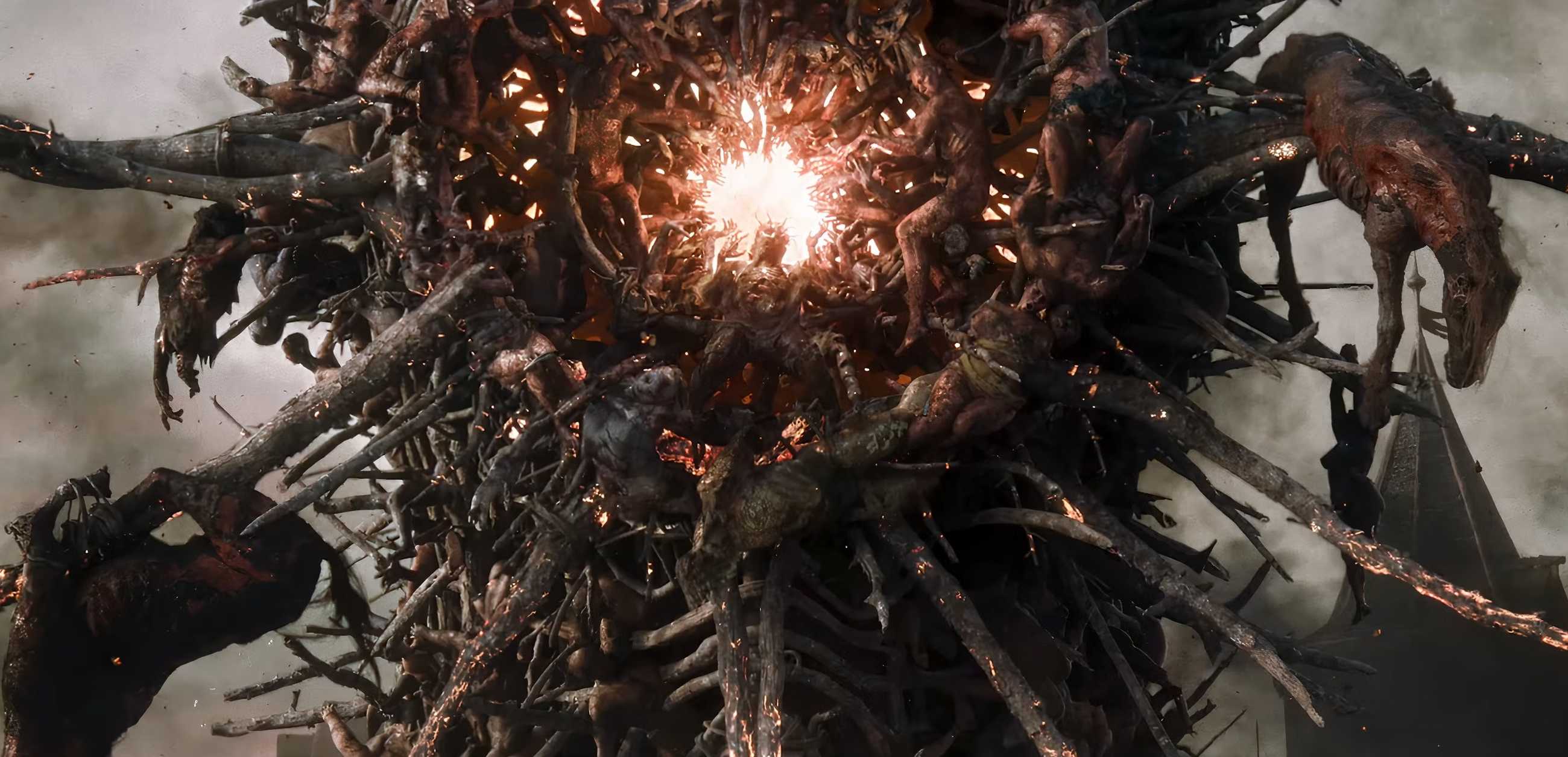
Larian rolled out the red carpet in order to get Baldur’s Gate 3 fans excited about Divinity. Its cinematic trailer at The Game Awards screams “high production value,” as Larian flexed its animation chops. The teaser is nightmarish, centering around a Midsommar-like cult throwing a festival in the middle of a small village. There’s puke, blood, an orgy, and a man being burned alive in gory detail. (Fun fact: That man’s design was based off of Smith!) It was a blockbuster reveal, one that showed that Larian is very confident in its next game.
But Divinity wasn’t always the plan. While the studio did intend to return to its other CRPG series soon enough, it originally wanted to follow Baldur’s Gate 3 up with a project that would have been a little more familiar to fans who discovered Larian through that game. Divinity has only been in development for two years following a major pivot.
“We were working on a new game set in D&D based on the Baldur’s Gate 3 engine,” Vincke said. “We were taking our time to work on Divinity. We were going to do that after. But then we saw that our hearts weren’t really in it. We basically were done with Baldur’s Gate 3, so we didn’t want to do another one. So we just stopped it then. And then we knew that the next one was going to be Divinity, but that accelerated everything, which meant that we had nothing. We had to start from scratch.”
Revisiting Divinity for the first time since 2016 wasn’t going to be easy. The team learned a lot making Baldur’s Gate 3, which Vincke refers to as the Divinity series at a more “evolved level.” Now, he says that Divinity will be an even more evolved version of that. To pull that off, Larian would need to begin by tinkering with the universe to create a solid storytelling foundation.
“One of the first things we did was start to build a universe, because Divinity was all over the place,” Vincke said. “We had to resolidify it, which we learned from doing D&D. And at the same time, we were making a new engine, so we adapted plans a little bit so we could use it earlier. That obviously did not work as well as you would expect, so we’re now at the end of a complicated transition.”
Vincke confirms that Divinity will be a turn-based RPG that can either be played alone or with friends in co-op. It’s also a standalone title, despite being set after the events of Divinity: Original Sin 2. Fans who have played previous games will recognize some returning characters, but knowledge of those games won’t be required. Vincke says that the goal is to create a “consistent, grounded world where fantastic things are happening because of you.”
That last part is key. When I ask what Larian considers the most important thing to get right in Divinity, Vincke gives a one-word answer: agency. Larian’s goal is to make a deeper RPG filled with “video game systems to lick your fingers off.” That’s something that made Baldur’s Gate 3 such a sensation, and Larian says that it’s pushing that even more here. That’s why it’s calling Divinity its “most ambitious game ever.”
“One of our big things is ‘create your own story.’ So the agency that we want to give you is the most ambitious bit,” Vincke said. “There are things in there, that when you see them you’re going to say ‘Really, It continues? Really, it continues? Really, it continues? But all I did was this!’ And we’re not going to tell you, we’re just going to discover. When I realized I could connect these things, they made me so happy. It gave my player heart joy, so that’s what I want you to feel when it comes out.”
Even beyond the deeper approach to player agency, Baldur’s Gate 3 has played an instrumental role in Divinity’s development so far. Larian specifically notes that it learned a lot about writing and producing cinematics from that game, and that will be a major piece of Divinity. (Though Vinke assures players that if you “turn into a boar” before heading into a cutscene, you’ll still be a boar in that cutscene.)
The team also examined the struggles they had creating Baldur’s Gate 3 as well. Vincke notes that onboarding could be tricky in that game since every class had its own ruleset to learn. To make Divinity a little more approachable from the jump, Vincke said that Larian set out to “define our own rulesets so we could make it more video game friendly.” A lot of those learnings came from Larian’s commitment to working with the Baldur’s Gate 3 community during that game’s development, something that helped shape the project into what it is today.
“We didn’t want to have reactions in Baldur’s Gate 3,” Vincke said. “Mid-development in early access, they really, really wanted reactions. We were afraid it was going to slow down the gameplay too much. So then we put them in and said, well it’s actually better. They have a point! Then there was a lot of cursing, and we started plugging them into the entire game and it was a really good moment because it made the game better.”
Larian’s community will be pivotal to Divinity’s success, too. Vincke says that the studio will continue taking fan feedback into account for the project, and will likely follow a similar playbook that the team used for Baldur’s Gate 3.
“We will most likely do early access,” Vincke confirmed. “I’m saying most likely because I don’t know how the games industry changes. So I don’t want to commit to anything at this point, but it was very successful for us. The players made the game together with us. If you look at Baldur’s Gate 3 pre and post early access, that was huge in terms of systems that changed and things we could tweak. It’s invaluable to us and it became our method since the first Divinity: Original Sin, so preferably yes.”
What we showed today is confrontationally dark and horrible, but we want to make people smile.
It’s with all of this in mind that Larian seems confident that it will be able to meet the hype for its first game since Baldur’s Gate 3, whenever it lands. (“We think we know when we’re going to be ready, but our track record is so bad, so we’re not going to make any promises,” Vincke said.) There’s good reason to think they can pull it off, too. The RPG’s cinematic reveal trailer got a strong reception from the crowd at The Game Awards. In fact, the biggest pop of the entire night just may have been when Larian’s logo flashed on the screen — at least according to one Polygon staffer who attended and is still nursing their earbuds.
It has also kept people talking after the show due to the fact that the Divinity trailer is memorably gruesome. It’s a thematically pitch-black trailer that’s managed to stir up some controversy after the show, as viewers debate if it was too much for the Game Awards stage (especially since it was presented without a content warning). But that’s the exact kind of reaction Larian dreams of eliciting from its players.
“What we showed today is confrontationally dark and horrible, but we want to make people smile,” Vincke said. “And we want to frighten them and make them cry and make them fall in love and break their hearts. But you want them to react and to feel something.
“It’s a game about bringing light into darkness. But it’s also a game where if you don’t want to bring light, you can make it even darker.”