It’s interesting to see how much AI adoption has accelerated over the last year.
Our latest research shows that 82% of senior leaders invested in AI for customer service in 2025, and 87% plan to in 2026.
But while most teams are using AI, our 2026 Customer Service Transformation Report shows that this usage is not equal. A gap is opening up between teams that have deployed AI at a surface level and those that have integrated it deeply.
Download the full 2026 Customer Service Transformation Report →
For this year’s report, we surveyed over 2,400 global customer service professionals across a range of industries to see how they’re using AI today, where it’s paying off, and what they’re betting on as they plan for 2026.
We found that for many teams, AI is still doing narrow work like answering simple questions or handling small parts of workflows. These teams are seeing benefits, but only a fraction of what’s possible. Meanwhile, a smaller group is pulling away. They’ve put AI at the core of their service operation, integrating it into critical workflows, giving it more responsibility, and continuously improving it over time.
The difference in results and overall support experience – for both teams and customers – is significant. Here’s what the data uncovered.
AI adoption is the norm, depth makes the difference
According to senior leaders, 82% of organizations invested in AI in 2025, with 87% planning to invest in the year ahead.
Despite this widespread investment, only 10% of teams report having reached a mature level of deployment, where AI is fully integrated into operations and working at scale.
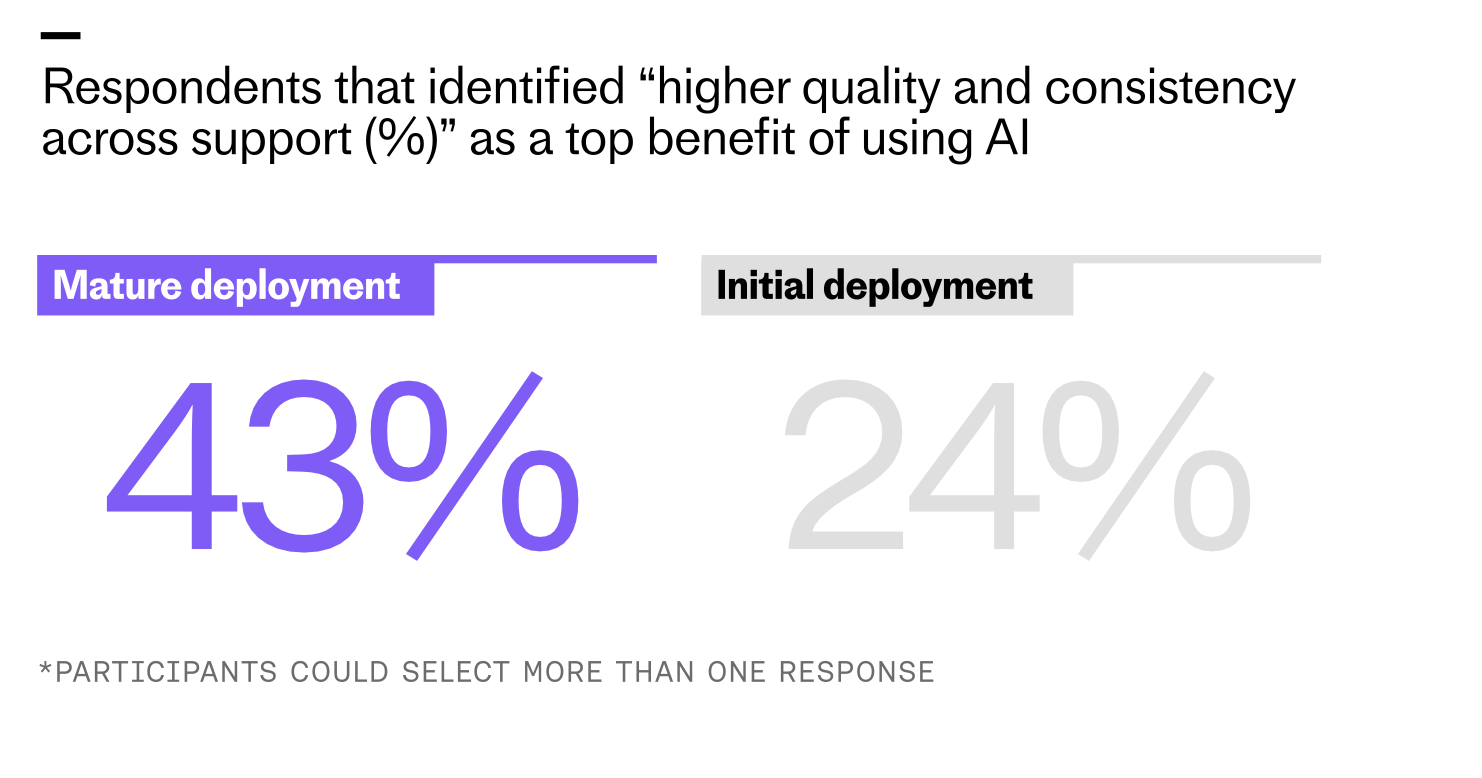
Reaching this level of maturity is where AI’s real value lies. We found that 43% of teams with mature deployment report higher quality and consistency across support – nearly double the rate of those still in the exploration or initial deployment stages.
ROI becomes clearer with deeper integration
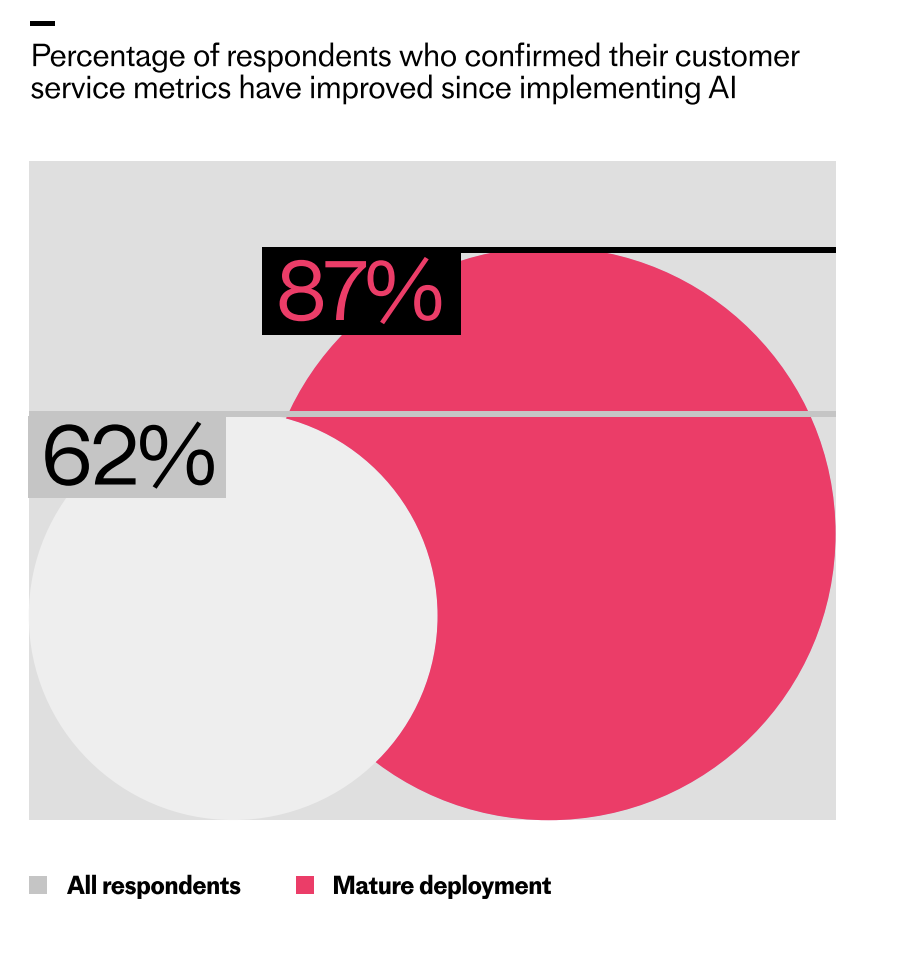
The economic benefits of AI tend to show up first in speed and throughput, and they show up fast. Across all respondents, 62% say their customer service metrics have improved since implementing AI.
Most often, teams report their initial gains in efficiency and scale. Faster responses, shorter handling times, and the ability to resolve more conversations with the same team all contribute to lower cost per interaction. But the deeper teams go with deployment, the more the results start to show in the metrics.
We found that among teams that describe their AI deployment as mature, the cohort of respondents reporting improved metrics as a result of AI rises from 62% to 87%.
What’s more, teams with more mature deployments are significantly more likely to say they can measure the return on their AI investment.
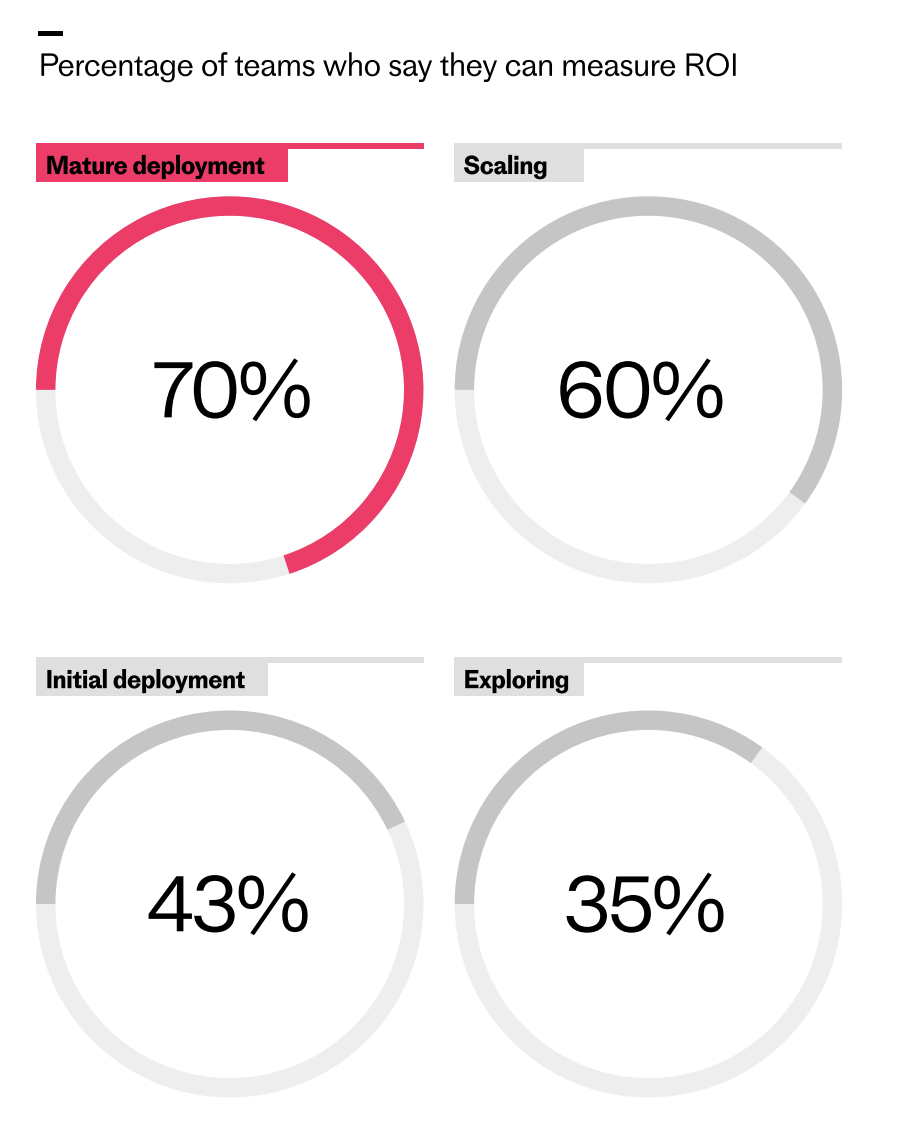
So, while early-stage teams may be seeing benefits, the ability to measure ROI that creates across-the-board buy-in is reported more often by teams with deeper AI deployments.
The bar has moved from ‘does it work?’ to ‘is it actually good?’
More than ever, teams are focused on improving customer experience and satisfaction, with 58% saying it’s the top priority for 2026. That number has more than doubled since last year, when just over a quarter (28%) of respondents cited it as a top priority.
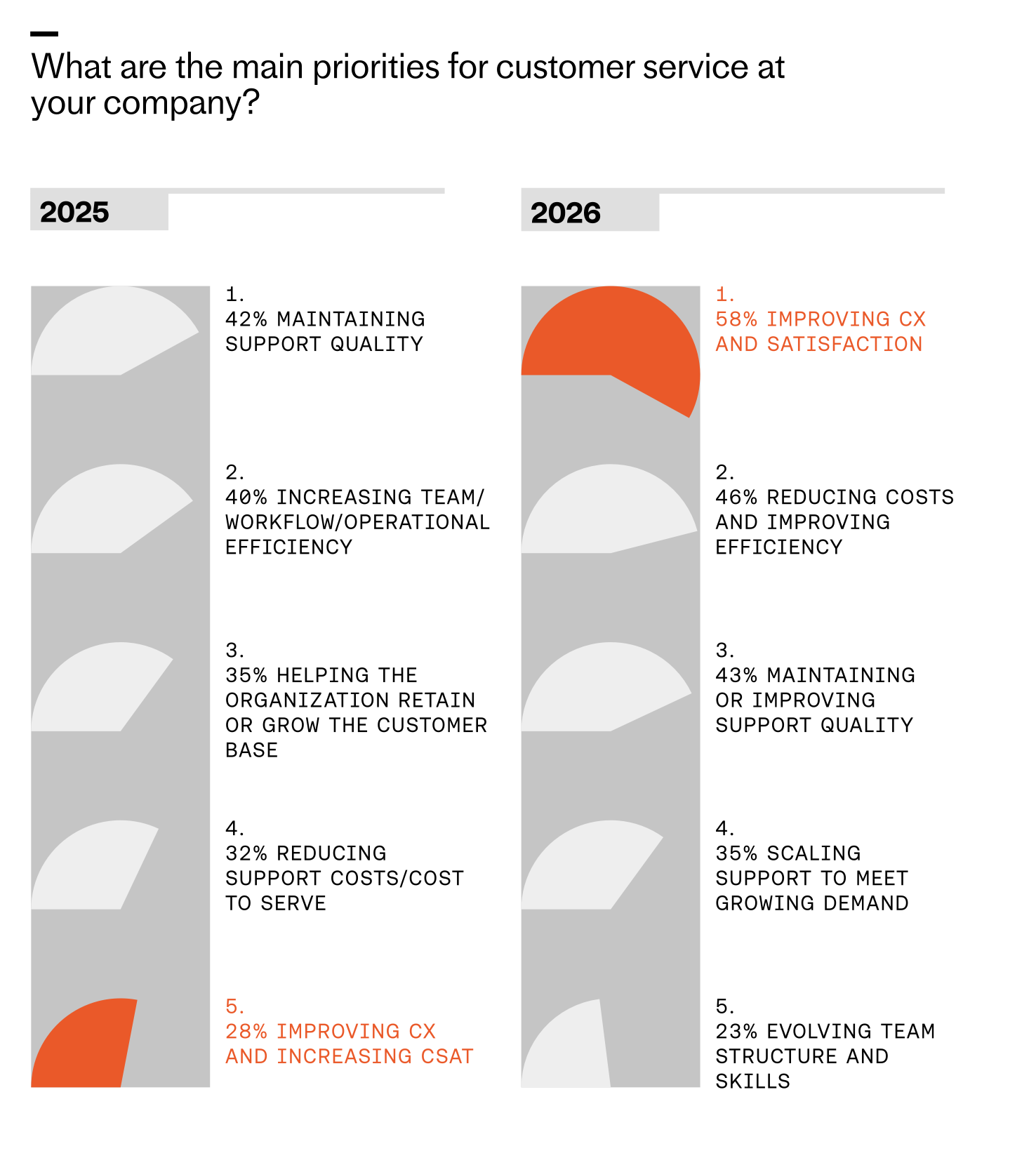
This suggests that as AI takes on more of the manual work, humans are being freed up to move from being reactive to proactive, with more time to focus on actively improving the customer experience. In other words, when the AI is working, the measure of success moves to how well it’s working.
Important support work now extends beyond the inbox
AI is reorganizing core customer service operations as it starts to take on a higher volume of work and more complex tasks. Even at the initial deployment stage, 16% of teams report spending less time handling support volume since implementing AI – and among teams who’ve reached maturity, that figure rises to 28%.
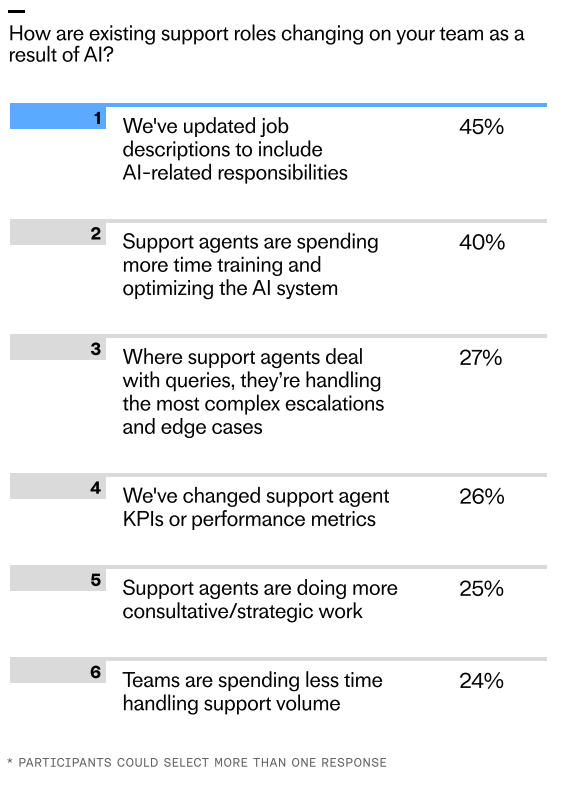
As the work changes, so does the team structure. Many organizations are reallocating existing staff to AI-focused roles or hiring for new skillsets entirely, and new roles are emerging that didn’t exist two years ago.
Support is creating the blueprint for AI deployment across the business
Support was the proving ground for AI, and our research suggests that businesses are now planning to expand its use to other areas based on the results it’s yielded so far. Fifty-two percent of respondents said that their organizations are actively planning to scale AI to departments like customer success, marketing, and sales in 2026.
The two most cited driving forces behind this decision are the success support has seen with AI to date and a desire to create a unified customer experience.
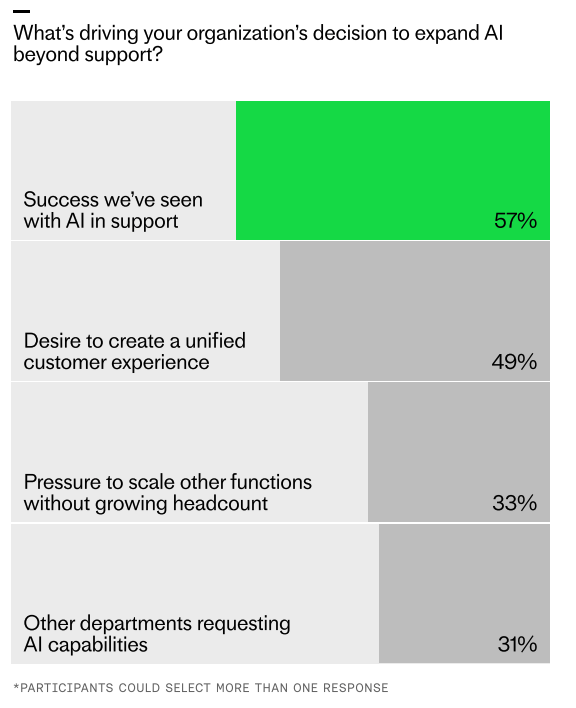
This presents an incredible opportunity for support teams to shape the future of customer experience as they help facilitate the move towards a level of seamlessness that’s never been possible before.
Seize the opportunity to close the gap
Having or not having AI isn’t a question anymore. What you should be asking now is how close you are to mature deployment, where AI is capable of tackling nuanced, high-stakes work.
Those who have reached this stage show that going deep is what unlocks real value. That’s the opportunity. Push AI to do more, bring it to more channels, use it to resolve the most complex queries, and close the gap before it becomes too wide to close.
This might seem daunting. But trying new things always is. What we’re experiencing now is a defining moment for customer service, and the teams that are leaning in are actively building the future. As this report shows, what works in customer service now will become the blueprint for how organizations transform the full customer journey with AI. Let’s make the most of this powerful opportunity.